Understanding Pulse Oximetry
Pulse oximetry is a quick, painless test that is used to measure the oxygen level (oxygen saturation) in your blood. It helps assess how well oxygen is getting to the parts of the body farthest from your heart.
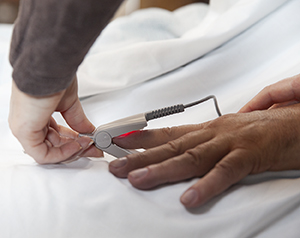
The test uses a small device (probe) that gently clips on the tip of a finger. Or the probe may be clipped to the earlobe or a toe. It works by shining a light that passes through the fingernail, tissues, and blood cells. A sensor on the other side detects how much light passes through the finger to calculate the oxygen level.
You may be told to use a pulse oximeter if you have a heart or lung condition such as heart failure or COPD, especially if you use supplemental oxygen. It may also be done as part of a routine checkup or during and after any surgery. You can also purchase an oximeter to use at home.
Why have the test
Pulse oximetry is done to see how well your lungs are working by checking oxygen levels in your blood. The test results are shown as your oxygen saturation level. It's also called O2 sat or SpO2. The percentage of oxygen in your blood is compared with the greatest amount your blood can carry.
Certain heart and lung conditions can lower the amount of oxygen circulating in your blood. Reduced oxygen in your body can damage organs, including the heart and the brain.
How the test is done
To check your oxygen level, lightly clip the oximeter to a fingertip. When placing the oximeter on your finger, make sure your hand is warm, still, and below the level of your heart. After a few seconds, the O2 sat reading is displayed. You can then remove the oximeter.
If you are in the hospital when you have pulse oximetry, the device may be left on for ongoing monitoring. It may be placed on your finger, toe, or earlobe.
Readings of 95% or above are considered normal in most people. Some people may have a different target range because of their health condition. Ask your health care provider what is normal for you.
Some pulse oximeters also show your heart rate (pulse). Be careful not to confuse the oxygen saturation and heart rate readings. Ask your provider which number is your oxygen saturation, if you can't tell.
A pulse oximeter may not give accurate results if you:
Risks of the test
Using a pulse oximeter has no risks.
What does it mean if your reading is too low?
An oxygen saturation level below 90% means you have hypoxia. This is when not enough oxygen is reaching tissues in the body. Symptoms of low oxygen levels include:
-
Bluish color of the face, lips, or nails.
-
Shortness of breath or trouble breathing.
-
Chest pain.
-
Racing pulse.
-
Restlessness.
Follow your health care provider’s recommendations about when and how often to check your oxygen saturation levels.
Contact your health care provider if your home O2 sat level is below 95%. A low reading may mean your treatment is not working well enough or that you need supplemental oxygen.